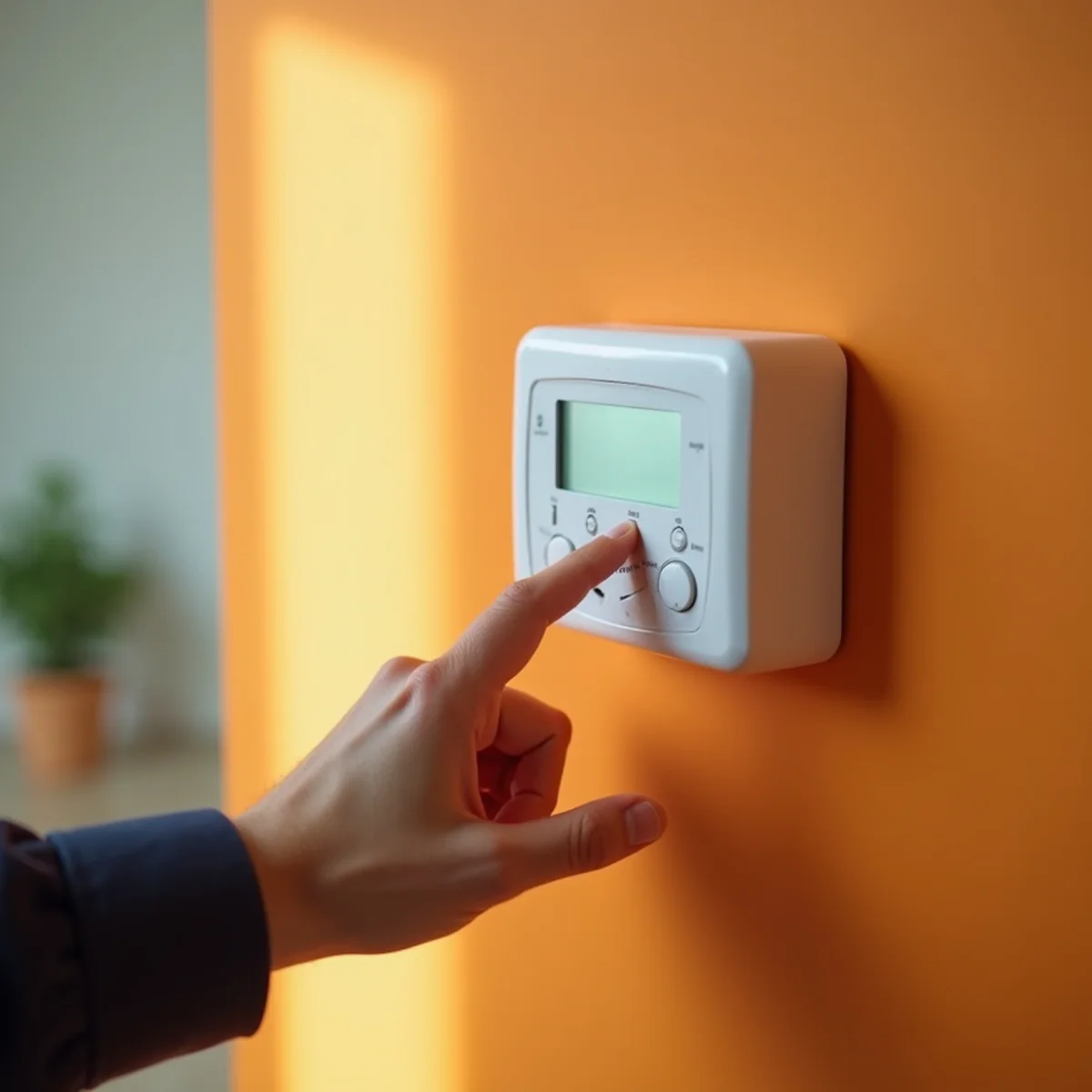
The Department of Energy recommends 78 degrees when you are home in summer and 68 degrees when you are home and awake in winter, with a setback of several degrees while you are asleep or away. Those are real starting points, not rules — in an Oklahoma July, an aggressive daytime setback can leave your system running for hours to catch up in the evening. The setting that works is the one your system can actually hold without running continuously.
This guide covers the question above in depth for Oklahoma City homes and businesses. Here is what it walks through:
- The recommended settings, and where they come from
- Why summer setbacks behave differently in Oklahoma heat
- Winter settings and the overnight setback
- How far apart your setpoints should be
- Signs your thermostat setting is not the real problem
- Where your thermostat is mounted matters more than people think
- Programmable vs. smart thermostats: what actually changes
- When to have your system looked at instead
What makes this guide useful: A daily setpoint schedule table with four real OKC household patterns (everyone out 8-5; someone home all day; night-shift household; heat pump home in winter), each showing hour-by-hour setpoints and a plain-English note on why. Paired with a recovery-time explainer graphic showing why an 8-degree setback on a 100-degree day can mean a multi-hour recovery, while the same setback on an 85-degree day recovers quickly. The DOE page gives the numbers with no local context; the manufacturer pages exist to sell thermostats.
If your system cannot hold the setting you want, contact Serrato Heat and Air at (327) 210-5999 and we will take a look.