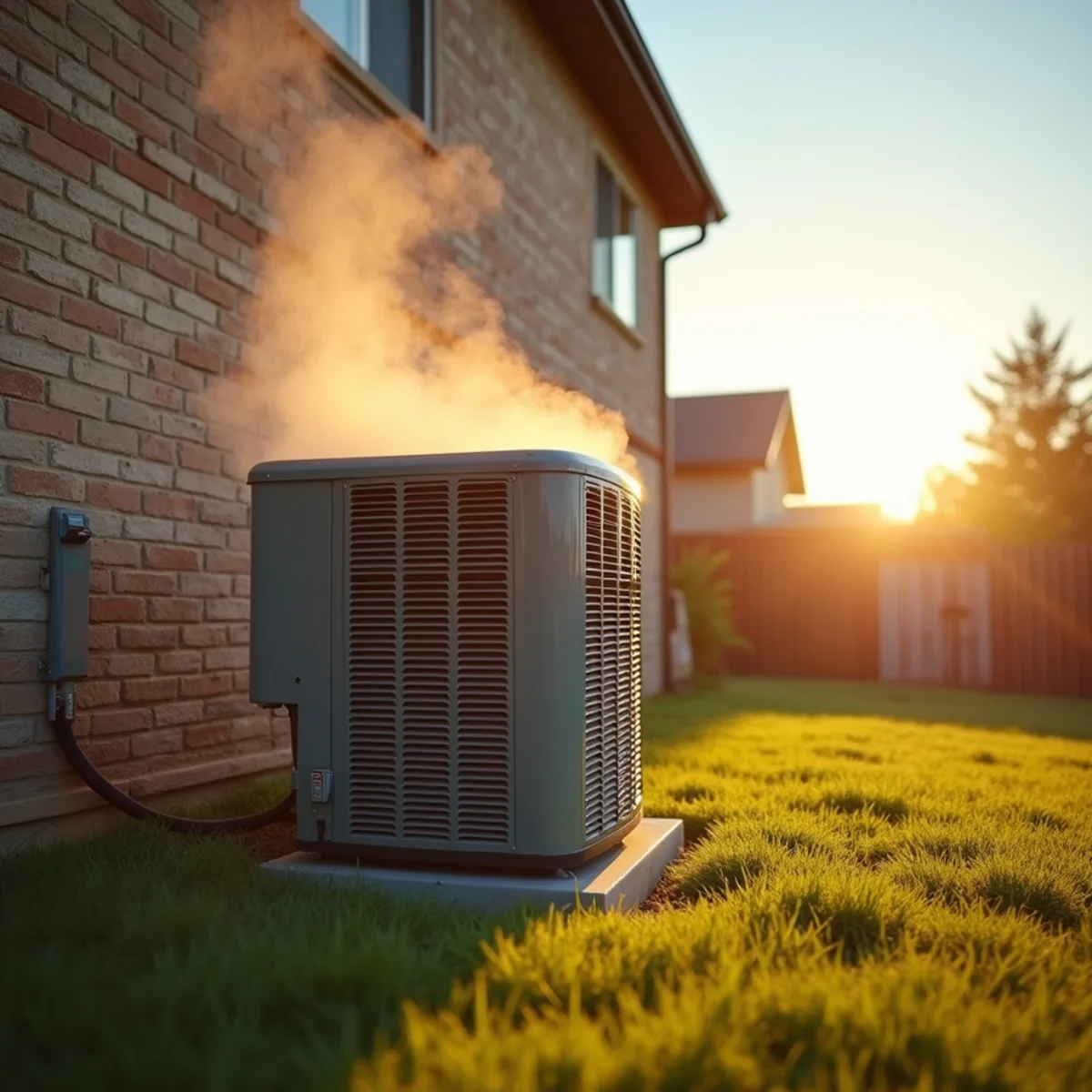
Oklahoma City's day-to-day temperature swings force your system to change modes constantly - heating overnight, cooling by afternoon - and that repeated starting and stopping is where the wear comes from. It shows up in compressors and contactors that see extra start cycles, ignitors and heat exchangers that go through repeated thermal expansion, and duct joints that work loose over years of movement. It doesn't mean something is wrong with your equipment; it means the shoulder seasons here ask more of it than a milder climate would.
Oklahoma City’s fast temperature swings are hard on an HVAC system because they force it to switch between heavy heating and heavy cooling with little transition, and they expose any weakness in sizing, ductwork, or an aging component. The systems that cope best here are correctly sized, well-maintained, and served by sound ductwork.
What “swing” actually means here
It is not unusual for central Oklahoma to run air conditioning one week and heat the next, or even in the same day during spring and fall. A front can drop the temperature sharply overnight. Equipment that would cruise through a milder, more gradual climate gets asked to change modes and work hard on short notice.
Where the strain shows up
- Sizing. An oversized system short-cycles — lots of hard starts and stops — which is exactly what a swinging climate encourages, and it wears equipment.
- Ductwork. ENERGY STAR estimates 20 to 30 percent of duct air is commonly lost to leaks. Under heavy load in either direction, that loss becomes obvious as uneven rooms and higher bills. See our ductwork services.
- Aging parts. A capacitor or igniter that was marginal fails under stress, and the swing seasons provide plenty of it.
What actually helps
Correct sizing on any new install, sound ductwork, and seasonal maintenance timed to Oklahoma’s calendar. A heat pump also suits the swing seasons well, since it handles both modes efficiently in a mild climate — our heat pump page explains where it fits. None of this is exotic; it is just matching the system to the climate it actually lives in.
If your system has been struggling through the shoulder-season back-and-forth, contact Serrato Heat and Air to discuss options. Call (327) 210-5999 or send us a message.