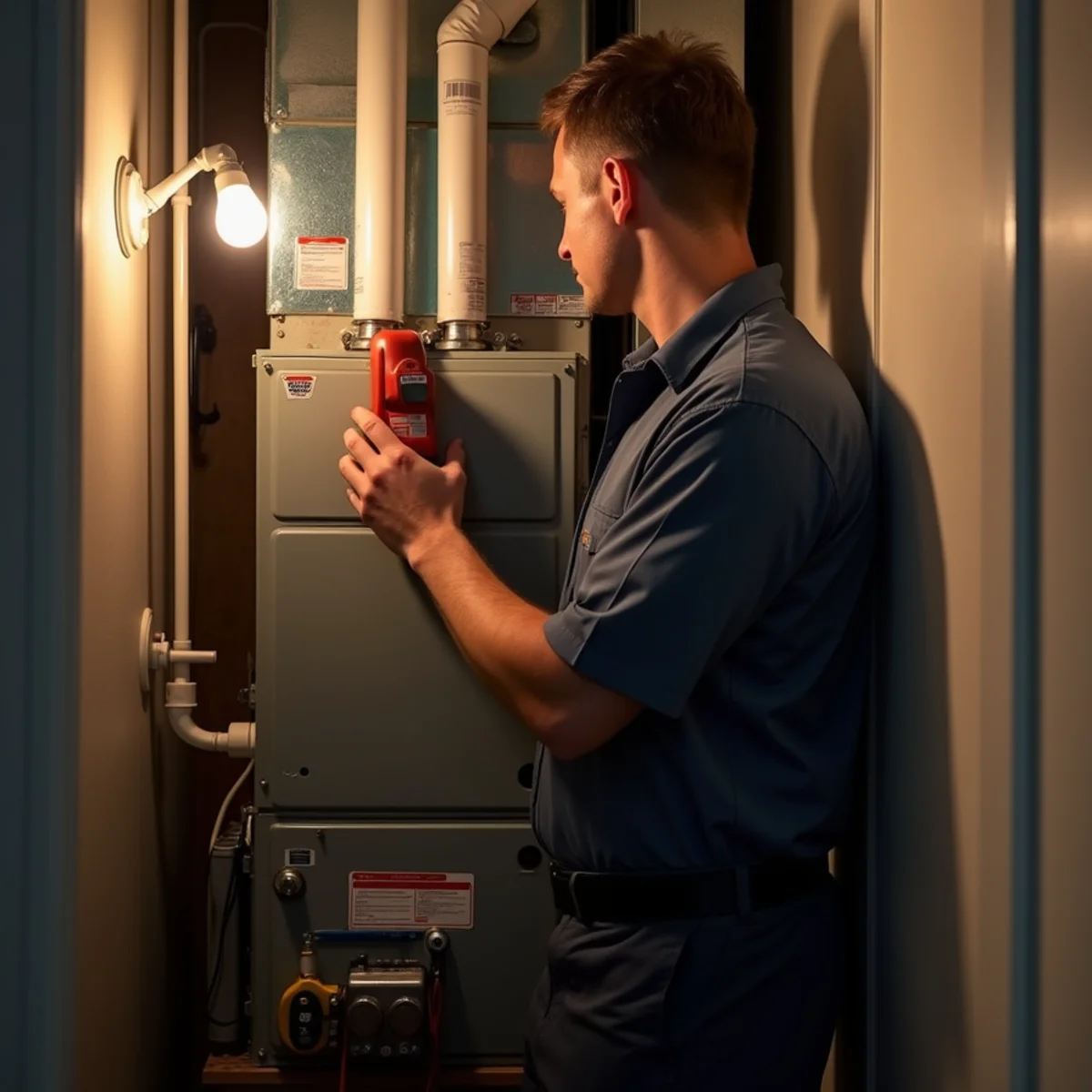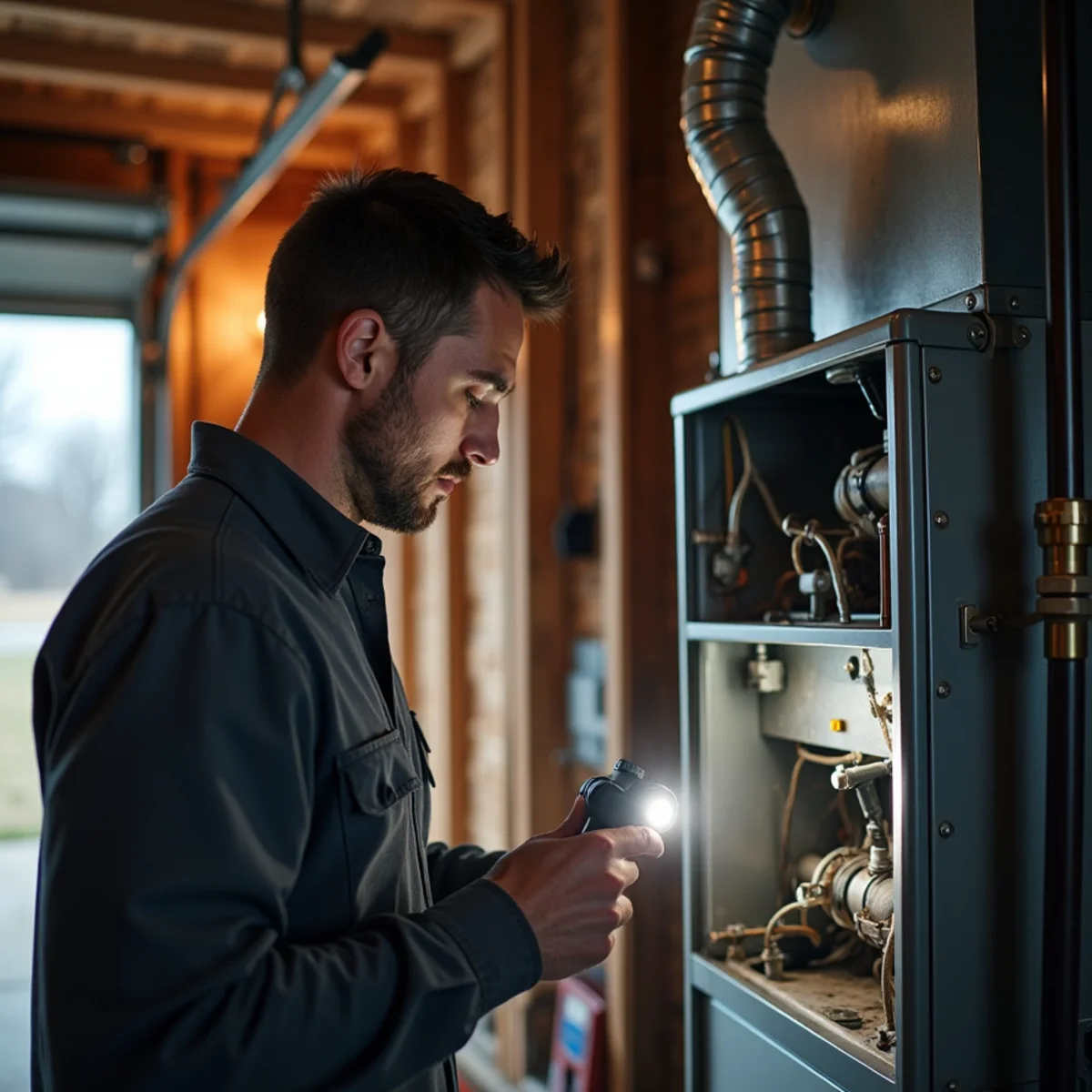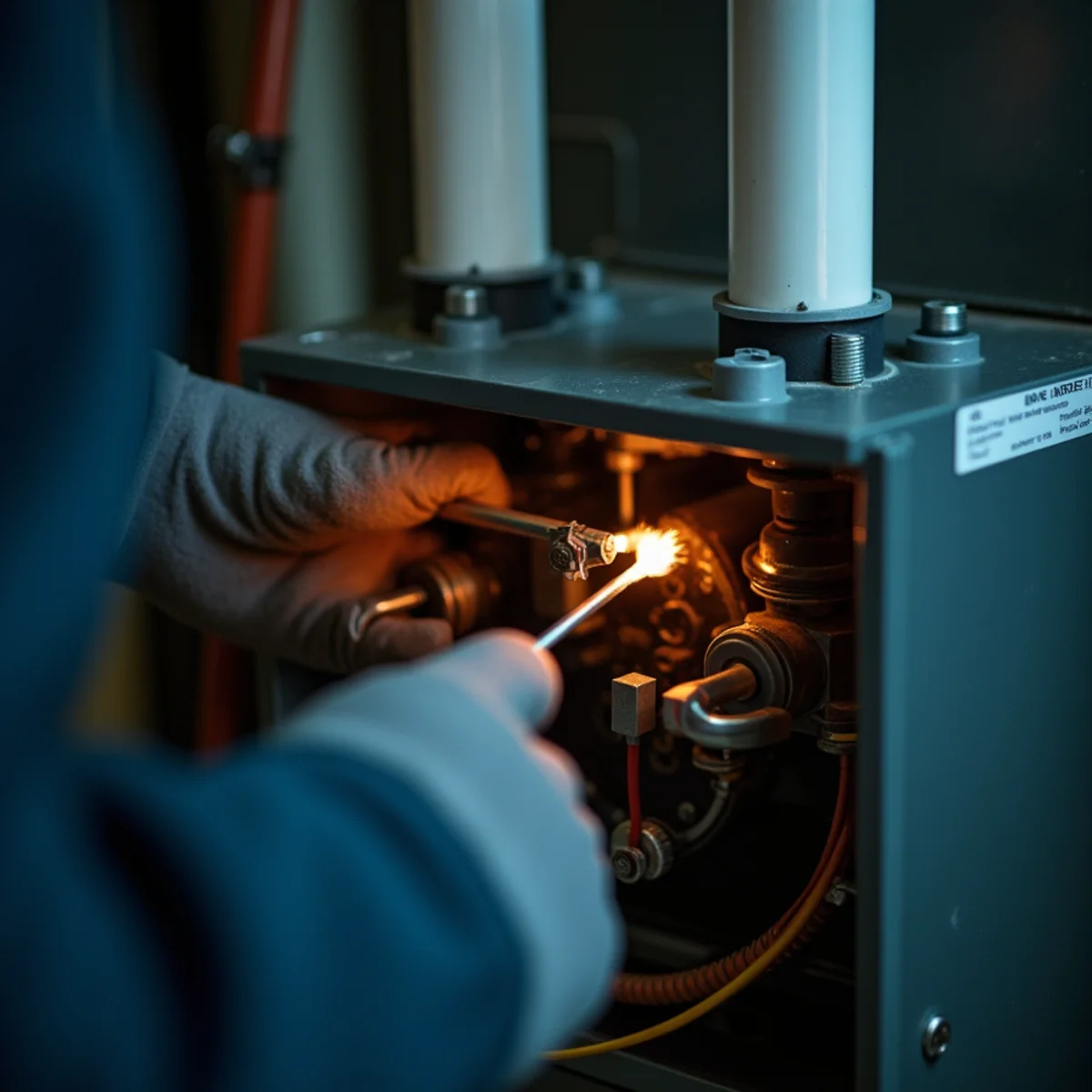
Before anything else: if you smell gas, leave the house immediately and call 911 or your gas utility from outside. Otherwise, a furnace that won't turn on most commonly traces back to a thermostat set wrong or with dead batteries, a tripped breaker, a furnace power switch someone flipped off, a blower door that isn't latched, or a clogged filter that tripped a safety. Those five are safe for a homeowner to check. Ignition components, the gas valve, and anything involving wiring are not.
This guide covers the question above in depth for Oklahoma City homes and businesses. Here is what it walks through:
- First: rule out a gas smell before you troubleshoot anything
- The five safe checks, in order
- Reading the blinking light on your furnace
- Symptom patterns and what they point to
- What to never touch: gas valve, igniter, wiring, flame sensor, capacitor
- When to stop and call
- Staying safe while you wait for heat
What makes this guide useful: A two-column "Green Zone / Red Zone" component diagram of a residential gas furnace: the same illustration labeled twice, with the five homeowner-safe items (thermostat, service switch, breaker, blower door, filter) marked in green and the hands-off components (gas valve, hot surface igniter, flame sensor, control board, inducer, capacitor, wiring) marked in red with a one-line reason each - gas, high voltage, stored charge, or safety-critical calibration. Manufacturer troubleshooting pages bury this in fine print; making it the centerpiece is the differentiator. Second asset: a decision flow from "what do you hear when you raise the thermostat?" to next step.
If the safe checks come up empty, don't force it. Contact Serrato Heat and Air at (327) 210-5999 and ask about availability for a no-heat diagnosis.